Music & Arts of Mindanao
From ancient gong ensembles and sacred dream-woven textiles to street dances that unite 11 tribes—discover the living creative heritage of Davao de Oro and the Davao Region.
Indigenous Musical Instruments
The Lumad peoples of Davao de Oro—Mandaya, Mansaka, and Dibabawon—have created musical instruments from the materials of their environment: bronze, bamboo, animal hide, and wood. These instruments carry spiritual significance and are played during rituals, celebrations, and everyday life.
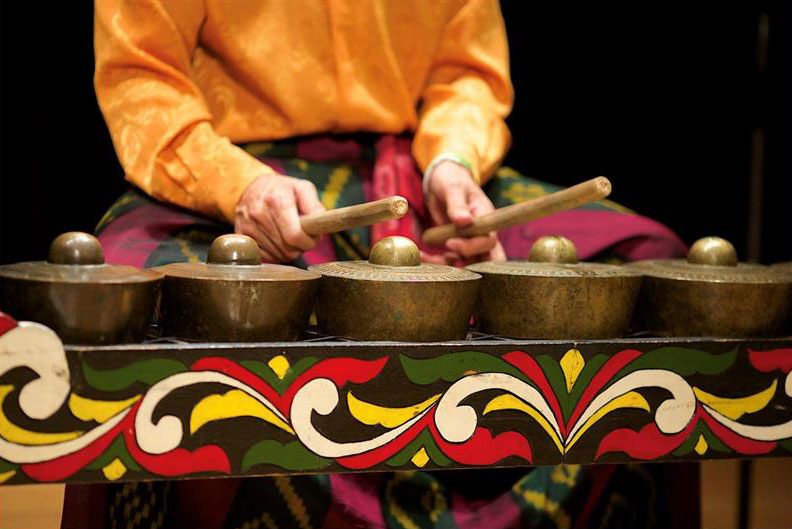
Kulintang
Gong Ensemble
A row of 5 to 11 graduated brass gongs played with mallets, forming the centerpiece of Mindanao's most iconic musical tradition. Preserved for over 1,700 years, the kulintang predates Islamic and Western influences in the Philippines.
Gimbal
Mandaya Spirit Drum
A large drum with deer hide stretched on each side, producing two distinct tones. The Mandaya use the gimbal to accompany the Balyan (spiritual healer) when summoning spirits during healing rituals.
Kubing
Jaw Harp
A small bamboo jaw harp that produces haunting, buzzing tones when plucked against the lips. Among the Maranao of Lake Lanao, it was used during courtship as a way to communicate secret messages through melody.
Bonabon
Mandaya Bamboo Flute
A meter-long bamboo flute played by the Mandaya people. Its music ranges from sentimental to jolly, carrying deep emotional expression that mirrors the moods of daily life in the highlands.
Kudyapi
Two-Stringed Lute
A boat-shaped lute carved from a single piece of wood with two strings, played across multiple Lumad groups. The intricate carvings on the instrument itself are considered works of art.
Traditional Dances
Dance in Mindanao is not performance—it is prayer, storytelling, and identity. From the royal elegance of the Singkil to the oceanic grace of the Pangalay, every movement carries the weight of centuries.
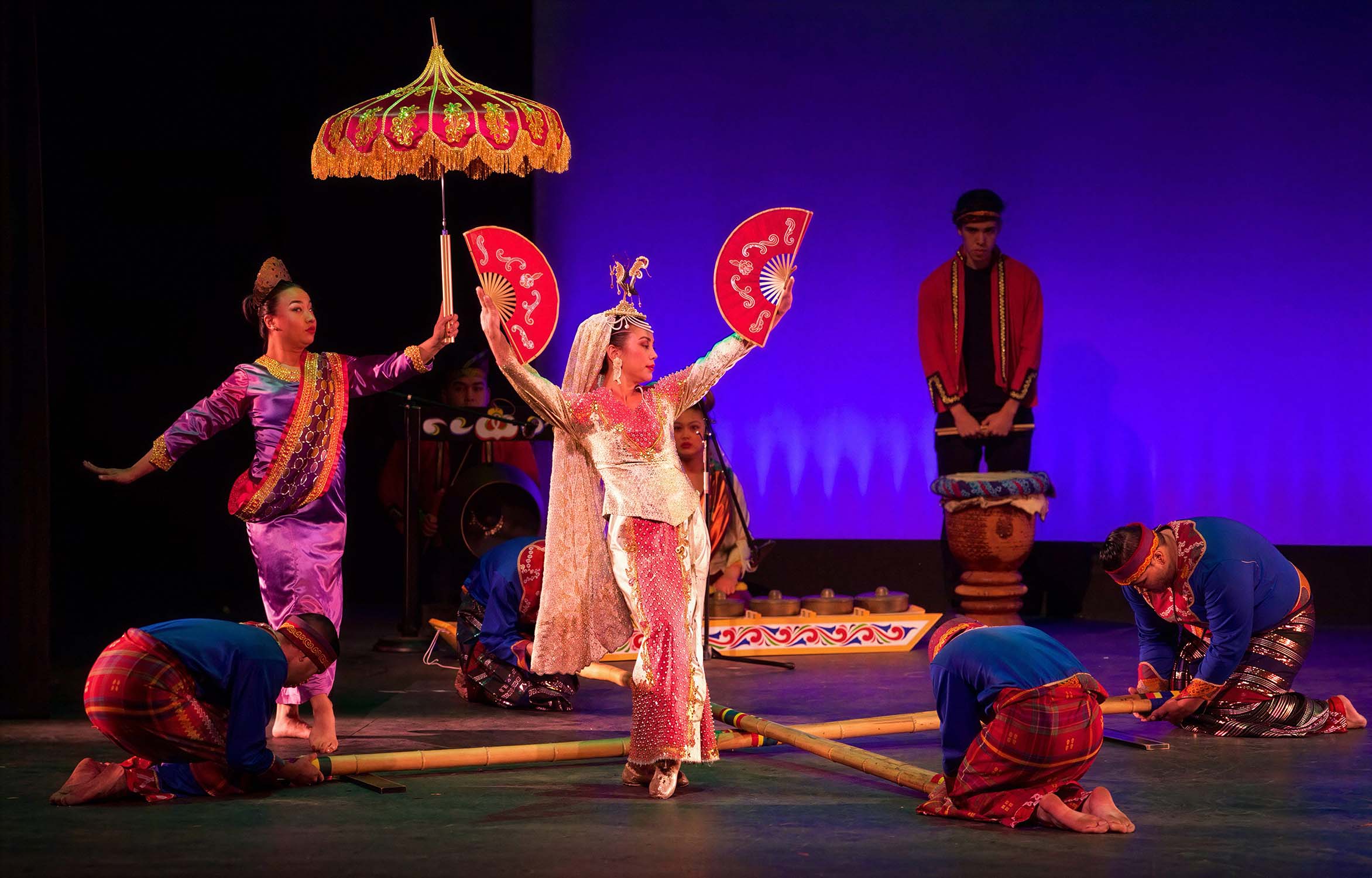
Singkil
Royal Maranao Dance
A princess weaves gracefully through crisscrossed bamboo poles clapped in syncopated rhythm, while a prince manipulates sword and shield. Based on an episode from the Darangen epic where Prince Bantugan rescues Princess Gandingan from enchanted spirits.
Pangalay
Dance of the Sea Gypsies
The signature dance of the Badjao and Tausug peoples, emphasizing fluid upper-body movements—rhythmic shoulder bouncing and hypnotic arm waving that mimics the ebb and flow of ocean waves. Performed at weddings and social gatherings.
Dugso
Manobo Ceremonial Dance
A powerful ceremonial dance performed to please the deities, asking for protection and bountiful harvests. Characterized by rhythmic stomping and jumping that connects dancers to the earth and the spirits beneath it.
Ata-Manobo Dances
8 Traditional Dances of Talaingod
Eight documented dances from the Ata-Manobo of Talaingod, Davao del Norte, each describing social activities and ways of living: Kalasag (shield dance), Pulutawi, Bangkakow, Inamungan, Natarin, Pungko, Aabaka, and Tagudturan.
Weaving Traditions
In Mindanao, weaving is not craft—it is language. Every pattern, color, and motif encodes ancestral knowledge, spiritual beliefs, and family identity. The Mandaya dagmay of Davao de Oro is among the most distinctive textiles in the Philippines.
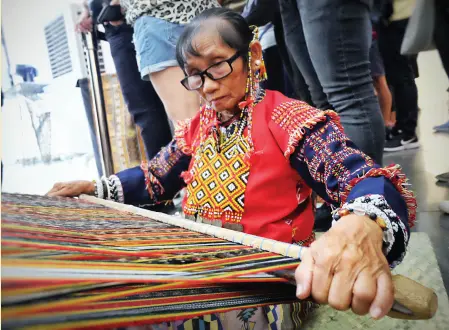
Dagmay
Mandaya Abaca Cloth
Ikat abaca cloth woven on back-strap looms by the Mandaya people of Davao de Oro. Its brown and reddish hues feature human figures and crocodile forms that honor ancestors—a distinctive feature found in no other Mindanao textile. Each family creates unique designs passed down through generations.
T'nalak
T'boli Dream Cloth
The T'boli are called "dream weavers" because their patterns come from Fu Dalo, the guardian spirit of abaca, through dreams. Three sacred colors carry meaning: white for purity, red for blood, black for soil. The cloth is considered sacred.
Yakan Weaving
Geometric Tapestry
The Yakan people of Basilan are known for bold, geometric woven patterns created through advanced tapestry weave and multi-heddle techniques. The vivid colors and mathematical precision of their textiles are instantly recognizable.
Indigenous Crafts
Beyond textiles, the indigenous peoples of Mindanao create stunning works in brass, bamboo, wood, and beads. Each piece carries cultural significance—patterns and symbols encode stories, beliefs, and identity.
Beadwork
B'laan & T'boli Tradition
Intricate beadwork adorns clothing, accessories, and ceremonial objects. The B'laan are renowned for embellishing their abaca garments with beads, embroidery, and mother-of-pearl designs that can take months to complete.
Brasswork
Maguindanaon Metalcraft
Lumad artisans create stunning brass artifacts through meticulous techniques passed down through generations. From household tools to decorative pieces, each item is adorned with intricate patterns and symbols holding deep cultural significance.
Basket Weaving
Baluyan & Nito Craft
Time-honored craft using natural materials—pandan leaves, nito vines, and bamboo—woven into baskets, mats, and containers. Geometric patterns carry deep symbolic meaning. The Maguindanao baluyan (carrying basket) is a functional masterpiece.
Wood Okir
Sacred Carving
Carved by ethnic groups across Mindanao and the Sulu Archipelago, okir motifs feature animals, spirits, and ancestral symbols. The act of carving is considered sacred—a practice honoring the spirits of the trees and the forest.
Festivals as Art
In Davao de Oro and the Davao Region, festivals are the ultimate expression of art—costumes become sculpture, dance becomes theater, and entire communities become the canvas.
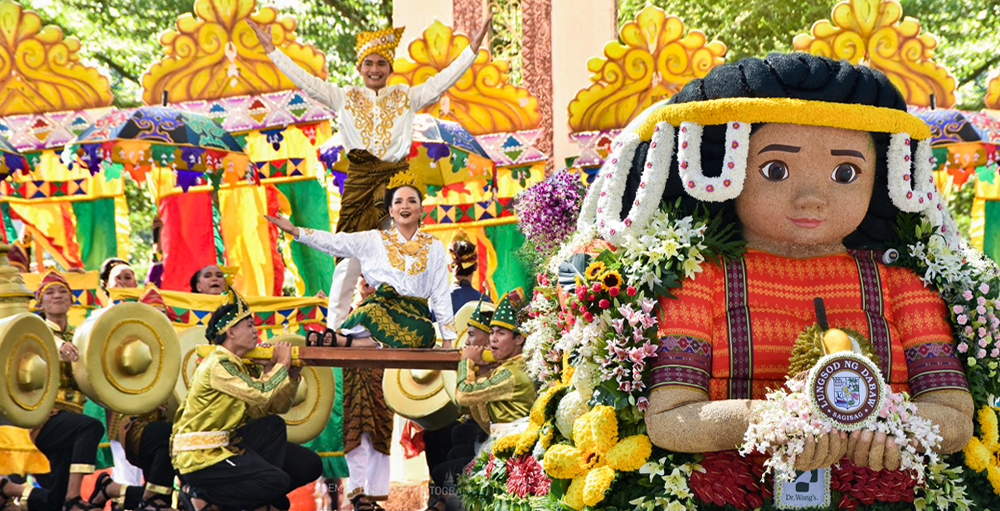
Indak-Indak sa Kadayawan
Street Dancing Competition
Davao's premier street dancing competition showcasing the cultures of 11 indigenous tribes. Hundreds of dancers in elaborate traditional costumes perform choreographed narratives of ancestral stories, creating a moving tapestry of color, rhythm, and identity.
Pamulak sa Kadayawan
Floral Float Parade
A grand parade of elaborately decorated floats made with fresh flowers, tropical fruits, and indigenous design elements. Each float tells a story of abundance and cultural pride, transforming the streets into a moving garden.
Bulawan Festival
Davao de Oro's Own
Held every March 8 to celebrate the founding anniversary of Davao de Oro province. "Bulawan" means gold—the festival honors the province's gold-mining heritage and rich cultural legacy through tribal performances, parades, and community gatherings.
Kaimonan Festival
Mansaka Thanksgiving
Celebrated every June 17 in Maco, Davao de Oro. "Kaimonan" is a Mansaka term meaning thanksgiving. The festival features rituals led by tribal elders, traditional music, indigenous dances, beautifully woven garments, and Mansaka cuisine.
Oral Traditions & Epics
Before written history, the peoples of Mindanao preserved their laws, values, and worldview through epic poems chanted across generations. These living literary traditions are among the longest and oldest in Southeast Asia.
Darangen
Maranao Epic Poem
The longest surviving epic poetry in the Philippines—17 cycles containing 72,000 lines narrating the exploits of the hero Bantugan. Proclaimed a UNESCO Masterpiece of Intangible Cultural Heritage in 2008. Traditionally chanted at weddings, accompanied by kulintang.
Ulahingan
Manobo Creation Epic
An epic poem sung during rituals and ceremonies by the Manobo people. It recounts the creation of the world, the exploits of heroes, and battles with supernatural beings—serving as a living repository of Manobo cultural identity.
Bayok & Saliada
Mansaka Songs
The Mansaka people of Davao de Oro preserve two musical-literary forms: bayok (songs of love and adventure) and saliada (ballad-like narratives). These songs are performed during weddings, harvests, and community gatherings.
Contemporary Arts Scene
Davao's creative community is vibrant and growing—from galleries showcasing indigenous-inspired contemporary art to a thriving indie music scene and street murals that transform urban walls into cultural canvases.
Art Galleries
Davao City hosts several galleries including Art Portal Gallery for Contemporary Art (est. 2015), the outdoor Mindanao Contemporary Art Gallery at Malagos Garden Resort, and Bintana Art Gallery. Artists blend indigenous motifs with contemporary techniques.
Street Art & Public Sculpture
A growing street art movement is transforming walls across Davao into vibrant murals depicting local life, nature, and identity. Sculptor Kublai Millan creates larger-than-life public installations found in parks, churches, and public spaces.
Contemporary Music
Davao's music scene ranges from reggae-OPM fusion to budots—an electronic dance genre born in Davao considered the first "Filipino-fied" EDM. The Aurora Music Festival and Davao Music Festival draw regional and national artists.
Experience It Live
The best way to experience Mindanao's music and arts is in person. Time your visit with the Kadayawan Festival in August or the Bulawan Festival in March, and witness centuries of tradition come alive.